Esplendor Dismorfia
World Premiere July 6–8 and 10–12, 2019, Festival d'Avignon – Vive le Sujet!, Jardin de la Vierge du lycée Saint-Joseph, Avignon/France
team:
Creation and Performance: Vera Mantero and Jonathan Uliel Saldanha; Set, Costumes, and Props: Vera Mantero and Jonathan Uliel Saldanha; Ribbon Mask Execution: Aldina Jesus; Technical Coordination and Operation: Joana Mário; Lighting Design: Leticia Skrycky; Soundtrack: Jonathan Uliel Saldanha; Voice: Vera Mantero; Texts: Paisagem com Argonautas, by Heiner Müller; excerpts from Le monstre dans l’art occidental by Gilbert Lascault, Klincksieck edition, Paris; Images: Joos Van Craesbeeck and Eric Erbe, Christopher Pooley, USDA/ARS/EMU, Agricultural Research Service, Wikimedia Commons; Production: O Rumo do Fumo; Co-production: SACD – Festival d’Avignon and Centro Cultural Vila Flor; Commission: SACD – Festival d’Avignon; Acknowledgments: André Guedes, Catarina Miranda, Miguel Pereira, Tiago Barbosa, Espaço Alkantara (Sinara Suzin); O Rumo do Fumo is funded by: Portuguese Republic | Culture | Directorate-General for the Arts;
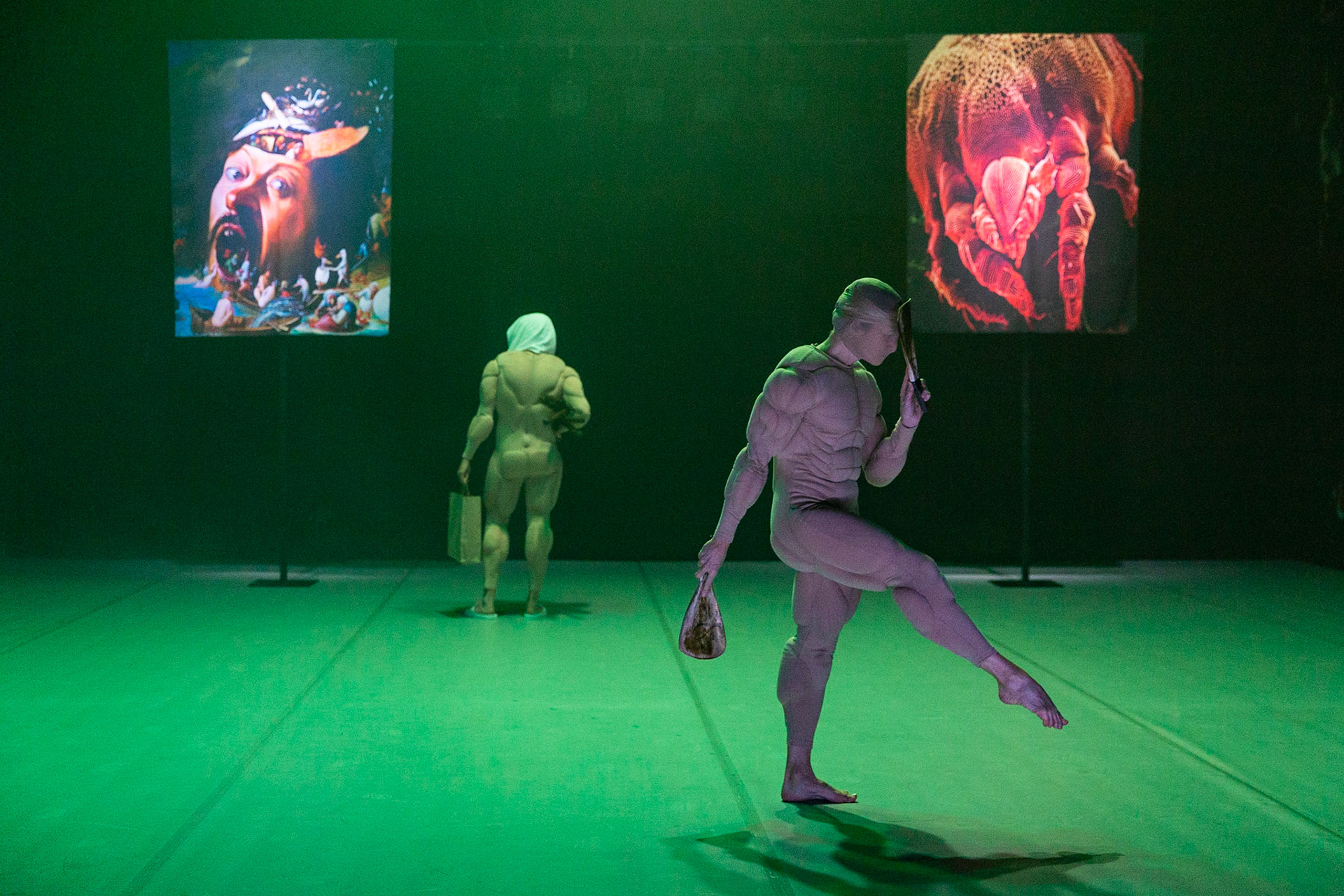
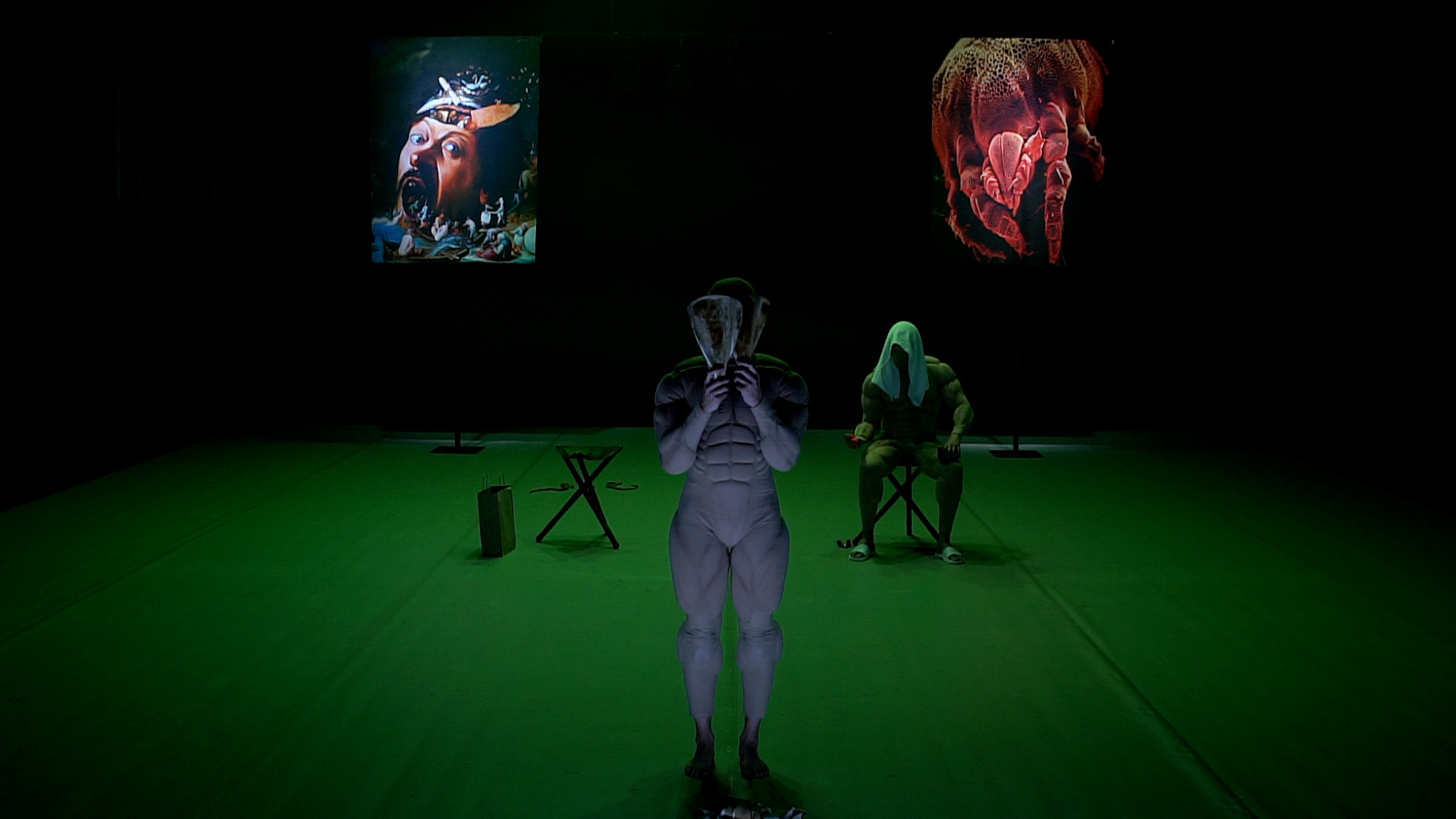
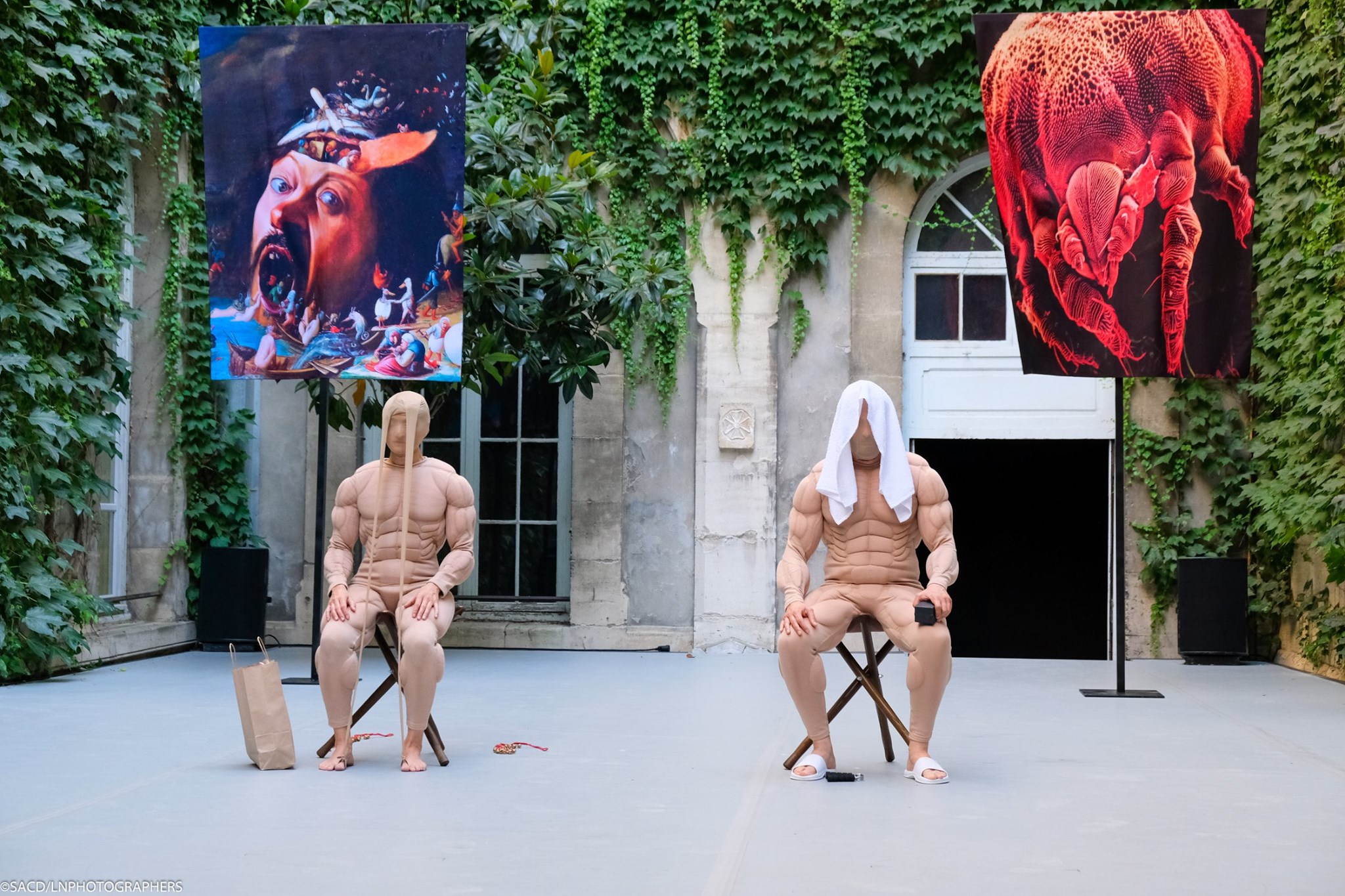
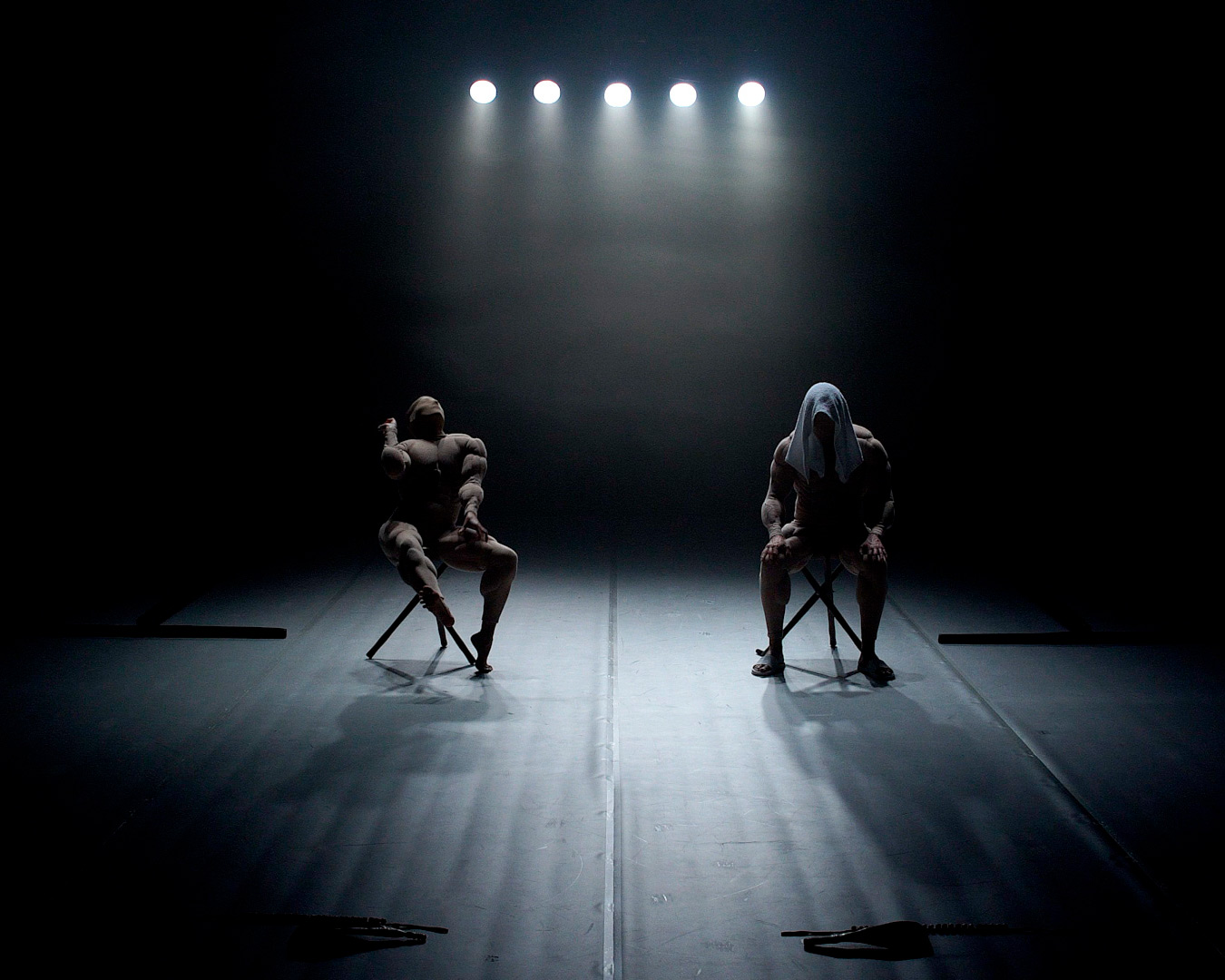
In Esplendor e Dismorfia, Vera Mantero and Jonathan Uliel Saldanha create a hybrid recital for two assexual, post-human creatures. Breathing animates their landscape-bodies as they oscillate between collapse and expansion. Fungal rhythms, dismorphia, and sonic residues compose a space of catastrophe and anti-catastrophe—where hyperpast, hyperfuture, voice, and sun co-exist in a glowing, unstable splendor.
Monstrification practices
Text by Cláudia Galhós for the Guidance Festival
The encounter between Vera Mantero and Jonathan Uliel is a matter of chance, perhaps akin to that of John Cage appearing, like a weightless virus, in the collection of materials - photos, videos, texts and sounds - that Vera has stored in her archive, referring to the collection she assembled for “The Caldeirão Highlanders, exercises in fictional anthropology”. She had already heard of him, and they met at the same festival - the DañsFabrik Festival, in Brest (France) in 2018, where they both presented their works. Her interest in Jonathan’s work is older, and was motivated by his multidisciplinary personality, that explores performance, the visual arts, and music, each with the same eloquence, sometimes almost apocalyptic. She saw a concert of “The Macumbas”, one of Jonathan’s musical projects, at ZDB (Lisbon) and was amazed by it. When the Avignon Festival invited Vera to create a work for the theme of “Vive le Sujet!”, it seemed to be the perfect opportunity to meet.
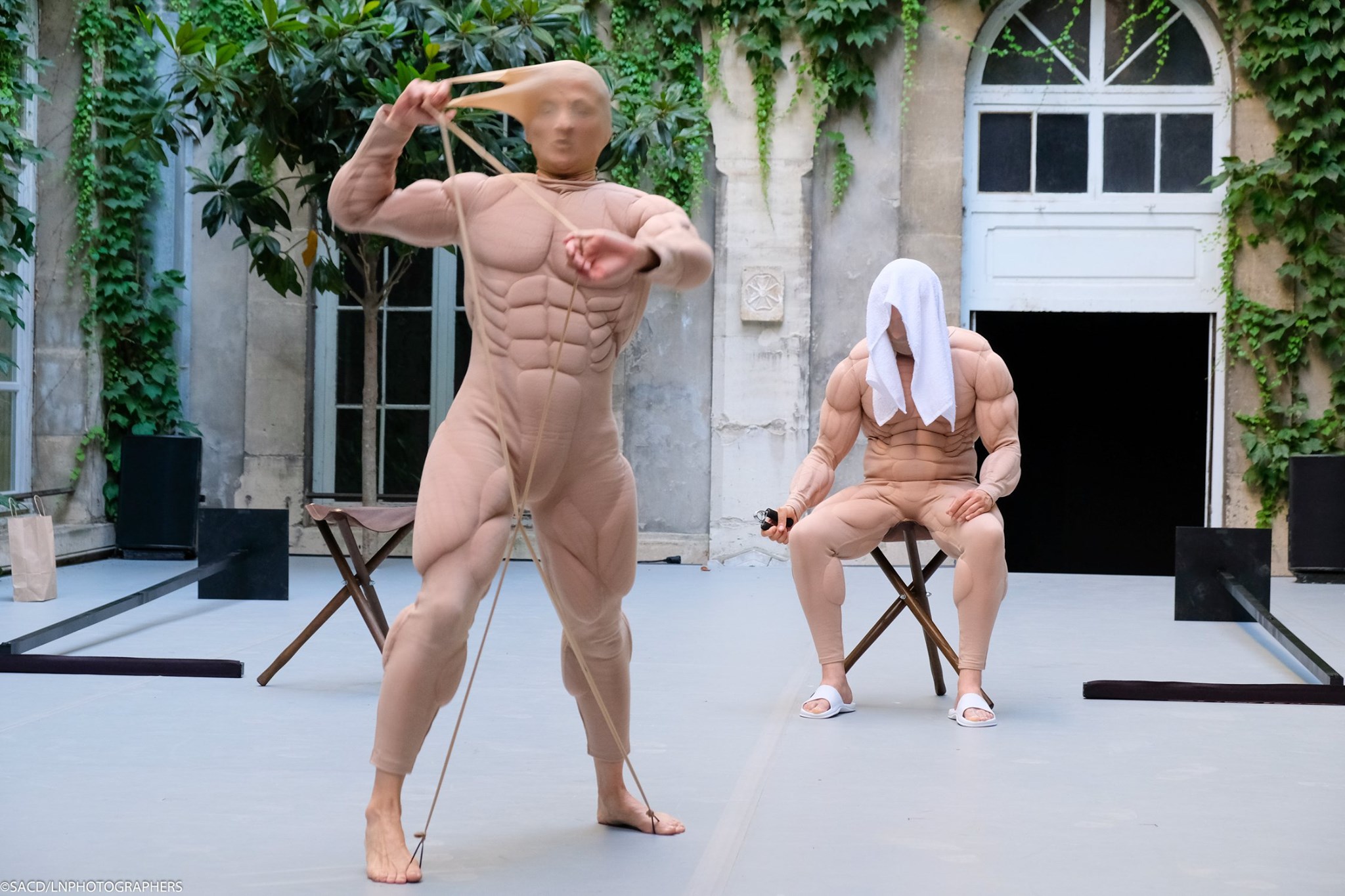
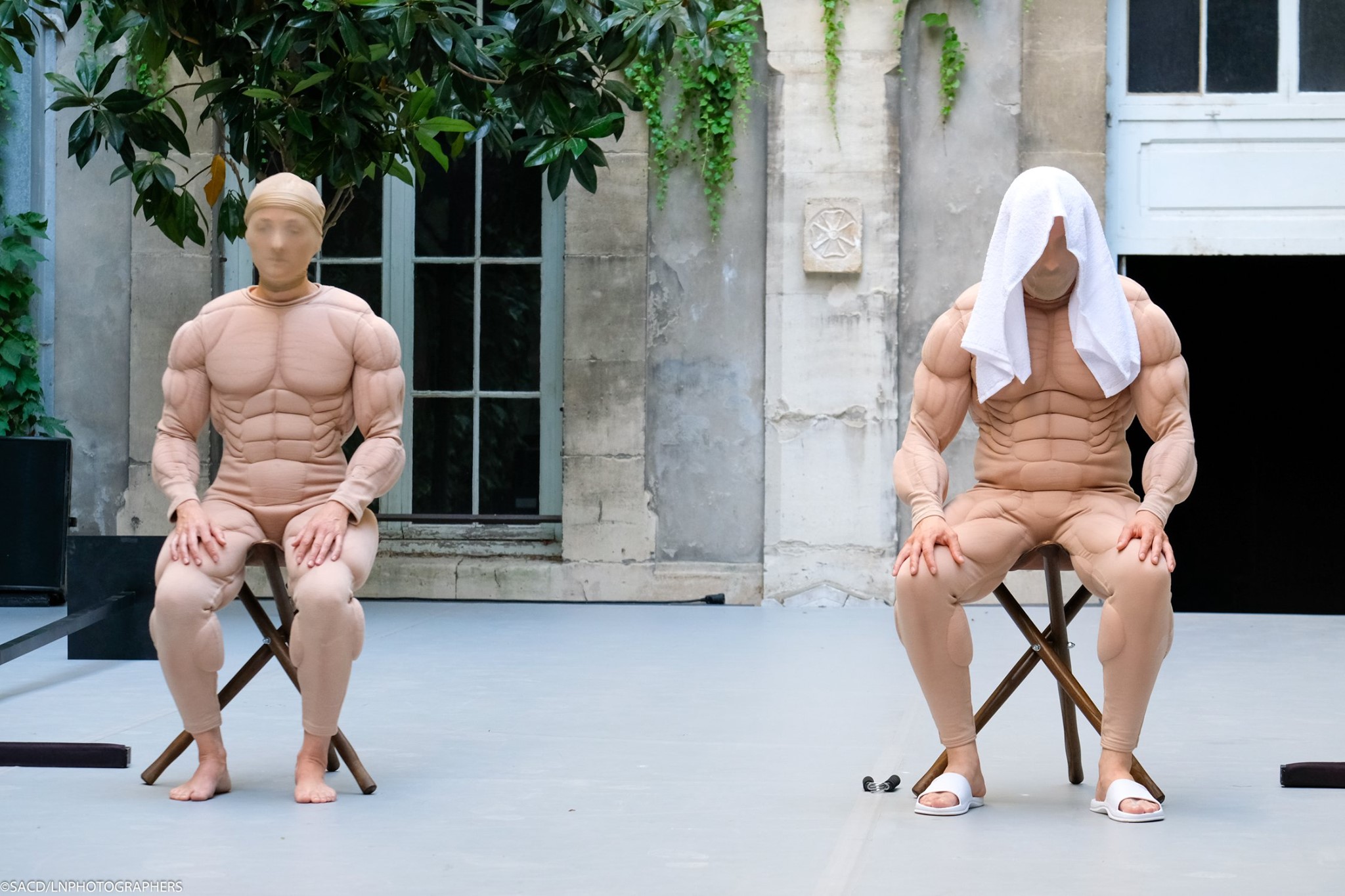
“Splendour and Dysmorphia” is a work created and interpreted by both artists, the result of a genuine collaborative meeting. “The only idea I came up with,” explains Vera, “was to respond to the fact that Vive le Sujet! is presented in the open air and is comprised by two plays, one after the other, so there was no time to move from one to the other, and we could not even have a set. There is also no lighting design because the play is presented in broad daylight. These were the constraints, so I had the idea: if we can’t have scenery, we can perhaps carry the scenery with us. And if we have to carry things, perhaps we could be covered by the scenery”. That was the reason for the layer of half-spongy air muscles that deforms the dancers' physiognomy and which simultaneously acquires meaning in relation to the conception of the body, and also to that of scenery.
The work was created through a process of exchange. Jonathan took this idea and suggested that it was possible to imagine that they were invaded by a fungus that transformed them. That’s how they came up with the idea of monsters, invaders, and metamorphosis of the body. During her research, Vera returned to one of her earliest plays, “Sob” (1993) and “For bored and profound sadnesses” (1994), in which she had already researched monsters. In the programme for this play, she quoted Jean Dubuffet: “face to face with our deepest mechanisms, which appear to us like a passionate revelation and shed light on our own being and the world, which makes us see the things around us with other, different eyes.”
The recurrent questioning of the possibility of dance arose alongside an idea of a monster that made it possible to question “the need to look within us for that which we normally don’t like to see or say, obscure elements within us, ugly elements. And other issues, such as immensity, impossibility, deviance”. These are recurring questions in Vera’s work, already stated therein, as the “vital need felt by human beings, to ensure their psychic survival, of a sense of disorder that alternates with order, of filth in the midst of what seems apparently clean. The fear of getting dirty or cluttered prevents us from achieving intensity ”.
One of the key references for “Sob” was Gilbert Lascaul’s book “Monster in Western Art”, in particular a list in which he describes all the possible forms of the monster in Western art, which for Vera “looks like a recipe book to make monsters.” The list appears again in “Splendour and Dysmorphia,” at Jonathan’s suggestion, although at first Vera didn’t agree with him: “It was strange, because he used it as a tool-text. We recorded the text and suddenly, when I heard it, I liked it so much that I thought it had to be used at the start of the work”. And that’s exactly what happened. (…)